


The Escape Illusion
Every organism on earth responds to threat the same way. Fight, flight, freeze, or fawn. These are not choices. They are reflexes. They are what happens before thinking begins.
What most business leaders do not realize is that companies do exactly the same thing. And right now, in the Gulf, all four responses are playing out simultaneously, at corporate scale, in real time. Each one is a path to failure.
The Corporate Threat Response
In our research for CRISIS, my co-author Jason Miklian and I studied hundreds of companies navigating conflict and instability across Iraq, Sri Lanka, Colombia, Palestine, Lebanon, Ukraine, and beyond. And we found that the most common corporate responses to crisis map almost perfectly onto the same four survival instincts that govern individual human behavior under threat.
In our 2021 Harvard Business Review piece, we identified the three most common ways companies respond to crisis, and why all three fail. The first is the heroic leader model: decisive, aggressive action by a single strong executive who assumes the crisis is a singular event requiring a forceful response and a return to business as usual. That is the corporate version of fight. The second is avoidance: issuing holding statements, promising solutions without delivering them, monitoring the situation, hoping the crisis will simply pass. That is freeze. The third is self-preservation at any cost: cutting local ties, closing offices, laying off workers, severing community relationships, burning every bridge at the first sign of trouble. That is flight.
In the book, we identified a fourth response that we see repeatedly in the most volatile environments: appeasement. Companies that try to buy their way through a crisis by paying bribes, making concessions to threatening actors, or abandoning their values to avoid confrontation. That is fawn.
All four are natural. All four feel rational in the moment. And all four, our research shows, lead to the same place: companies that are weaker, more isolated, and less capable of surviving the next shock.
Look at the Gulf today and you can see each one.
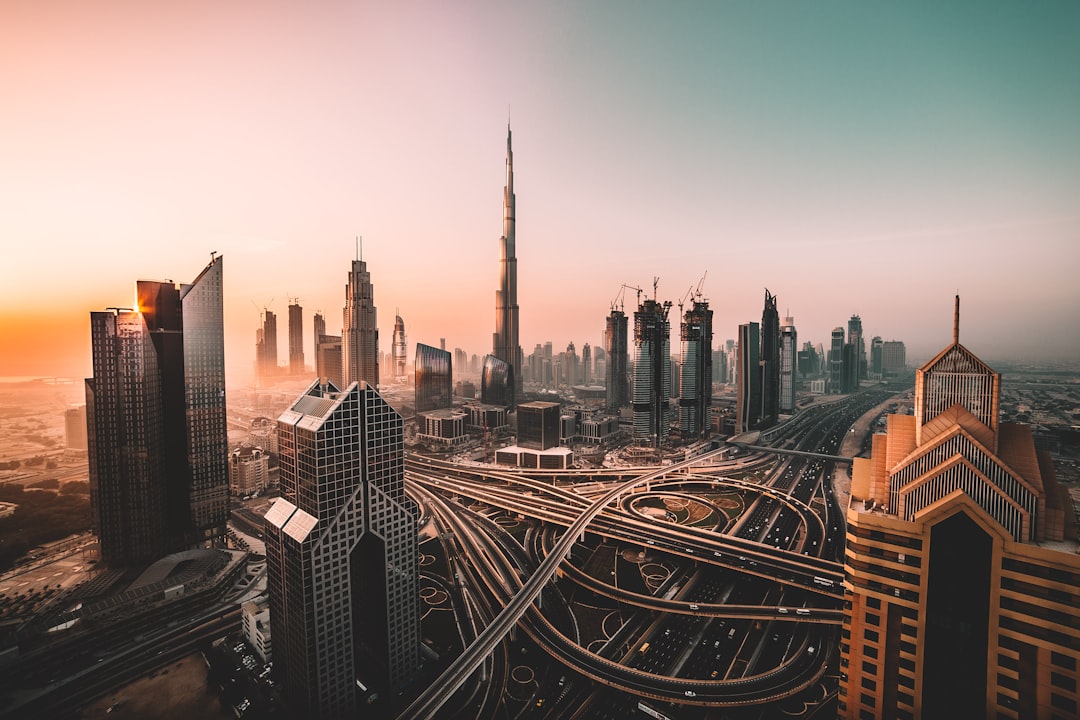
Flight is the most visible. Goldman Sachs, Citi, and Standard Chartered have ordered Dubai staff to work from home or relocate. The ICD Brookfield tower in the Dubai International Financial Centre, home to BlackRock, JPMorgan, and BNP Paribas, stands largely empty. Over 37,000 flights have been cancelled since February 28. Emirates has reported a 40% drop in passengers. Private evacuation flights are running upwards of $250,000. Bloomberg is drawing comparisons to Hong Kong’s pandemic-era talent drain. Companies are not just evacuating personnel. They are relocating regional headquarters, severing supply chain relationships, writing off investments. These are not temporary measures. They are structural retreats that will take years to reverse.
Freeze is quieter but equally widespread. Across the region, companies are issuing statements about “monitoring the situation” and “assessing developments.” Internal decision-making has stalled. Strategy reviews are on hold. Hiring is suspended. Investment committees are waiting for clarity that is not coming. In our research, we found this response consistently in the early stages of every conflict. It feels prudent. It is actually paralysis. The companies that froze during COVID-19, during the early weeks of the Ukraine invasion, during the onset of the Arab Spring, were the ones that lost the most ground to competitors who adapted while they waited.
Fight is less common but visible in certain sectors. Some companies are doubling down on Gulf positions, making aggressive acquisition plays on distressed assets, or publicly dismissing the threat as overblown. The instinct here is to project strength and seize opportunity. In our research, this response is associated with the “heroic CEO” model: the leader who assumes they can outmaneuver the crisis through sheer force of will. It works occasionally. It fails catastrophically when the crisis turns out to be longer, deeper, or more interconnected than the leader assumed. And polycrisis is always longer, deeper, and more interconnected than anyone assumes.
Fawn is the hardest to see but is already happening behind closed doors. Companies quietly adjusting their public positions to avoid drawing attention from any side of the conflict. Firms with operations in both Israel and the Gulf carefully scrubbing messaging to offend no one. Businesses offering quiet concessions to local power brokers in exchange for continued operating permission. In our fieldwork, we found that appeasement is the most corrosive response of all. It erodes the company’s values, compromises its positioning with every stakeholder simultaneously, and creates a dependency on whoever holds the most leverage at any given moment. As we write in CRISIS, in times of crisis it is a natural instinct to try to secure and save what has been built, gravitating toward strategies like retreating, cutting costs, even appeasing threats temporarily through corrupt or unethical practices. Anything to survive. But the companies that survive through appeasement rarely thrive through recovery.
What Actually Works
If fight, flight, freeze, and fawn all fail, what succeeds?
The answer from our research is consistent across every conflict zone we studied, and we outlined it in both our Harvard Business Review piece and in CRISIS. The companies that survived and thrived did not choose one of the four instinctive responses. They overrode them. They responded with a deliberate, values-driven strategy built on three principles.
The first is community embeddedness. In every crisis we studied, companies that had deep, genuine relationships with local communities outperformed those that treated communities merely as sources of consumers or raw materials. In Sri Lanka, Merrill Fernando kept Dilmah Tea running through a twenty-five-year civil war because he had spent decades building trust across ethnic and political lines. Foreign competitors who received the same death threats fled. They never came back. Fernando stayed because his community relationships gave him something no crisis plan could provide: real-time local intelligence, earned loyalty, and a social license to operate that no contract could guarantee. In Palestine, Zahi Khouri built the National Beverage Company into a $100 million business through two intifadas because he built bridges across community divides, engaging Israeli and Palestinian leaders directly rather than working only through official channels. These were not acts of charity. They were strategic investments in the only kind of infrastructure that holds during crisis: human relationships.
The second principle is working beyond official channels. In our HBR research, the most common mistake we documented was companies partnering only with local governments as if they were synonymous with community interests. When South Korean steel manufacturer Posco tried to launch a $12 billion project in Odisha, India, it did everything by the book, working exclusively through state officials. Those officials pocketed resettlement money meant for displaced farmers, who eventually allied with insurgents and attacked Posco’s offices. After ten years and $1 billion lost, Posco abandoned the project. The lesson: in volatile environments, official channels are necessary but insufficient. The companies that thrive are the ones that maintain direct relationships with the full range of local stakeholders.
The third is principled political clarity. Our research shows that companies thrive when they make consistent choices and communicate them clearly, even when a segment of the population disagrees. Chobani doubled down on hiring refugees after online attacks and boycott threats. It became America’s top-selling Greek yogurt brand. Companies that try to remain blank slates, offending no one, end up trusted by no one. In polarized environments, vague values are more dangerous than unpopular ones.
The underlying error connecting all four threat responses is the same: they treat crisis as a binary. Either it is safe and we stay, or it is dangerous and we leave. Either we fight or we fold. Either we hold firm or we capitulate.
Polycrisis does not work that way. The consequences of the Gulf war are already cascading far beyond the Gulf. Energy prices in Tokyo. Fertilizer costs in Iowa. Tech valuations in San Francisco. Air defense stockpiles in Kyiv. Companies that relocate their Dubai operations to Singapore have not escaped the crisis. They have escaped their ability to influence the outcome in one of the world’s most strategically important regions.
The normalcy bias told companies the Gulf was permanently safe. The escape illusion now tells them it is permanently dangerous. Both are projections of the present moment onto the permanent future. Both are wrong.
Dubai’s fundamental value proposition has not evaporated. Its geographic centrality, its regulatory framework, its tax structure, the human capital assembled over decades. What has changed is the security assumption. Companies that recalibrate their security posture without dismantling their strategic position will be far better placed than those who panic-relocate and spend three years rebuilding relationships from scratch.
The companies that will be best positioned in eighteen months are the ones making reversible, flexible decisions right now. Enabling whatever their people feel is safest for their families, because that is both the ethical imperative and the practical one, while maintaining the operational commitments and community relationships that will determine whether they have a viable business to return to. Distributing operations across multiple hubs rather than centralizing in a new single point of failure. Keeping local partnerships alive rather than severing them.
Nearly 90% of Dubai’s residents are foreign workers. When multinationals shutter their offices, it is not just expatriate professionals who lose. It is the communities that depend on that corporate presence for stability and livelihood. In every conflict zone we have studied, the companies that stayed and invested in their communities did not just protect their own interests. They provided stability, employment, and social infrastructure that helped those communities survive.
Beyond Instinct
Fight, flight, freeze, and fawn are reflexes. They are what happens before strategy begins. The companies that will define the next era of Gulf business will be the ones that override those reflexes with something harder and rarer: a deliberate, embedded, values-driven approach to operating in uncertainty.
Our research says safety is not a place you can move to. It is a capability you build. It comes from relationships that were invested in before the crisis, from decision-making structures that can flex without breaking, and from the willingness to hold complexity instead of reaching for simple answers.
The instinct right now is to run, to freeze, to fight, or to fold. The companies that will emerge strongest are the ones that do none of those things. They are the ones that think.